Global markets weekly update
20.10.2025

U.S.
- Each of the major U.S. indexes posted a gain of around 2% as stocks rebounded from a setback the previous week. However, stocks’ weekly gains didn’t come easily, as worries over trade policy and regional bank credit risks generated considerable volatility (the VIX reached its highest level since April) notably for assets such as cryptocurrencies and gold.
- Gold futures surged more than 5% for the week and achieved their ninth weekly gain in a row, reaching as high as USD 4’392 per ounce on Friday. The price of Bitcoin fell to its lowest level in three months below USD 104’000, 17% below a record high of more than USD 126,000 reached less than two weeks earlier.
- The major U.S. banks that initiated the earnings season (JPMorgan Chase, Citigroup, and Wells Fargo) exceeded analysts’ Q3 profit and revenue expectations. As of Friday, analysts projected that financials sector earnings rose 18.2%, above the 8.5% growth forecast across all sectors in the S&P 500, according to FactSet.


- Elsewhere, Fed Chair Jerome Powell signaled more rate cuts amid weakening labor market, despite inflation remaining above target.
Europe.
- The Eurostoxx 600 ended the week 0.37% higher, on dovish comments from U.S. Fed Chair Jerome Powell and some signs of de-escalation in U.S.-China trade tensions. Major stock indexes were mixed. France’s CAC 40 Index rallied 3.24%, Germany’s DAX fell 1.69%, and Italy’s FTSE MIB lost 0.69%. The UK’s FTSE 100 Index declined 0.77%.
- Industrial production in the euro area contracted a seasonally adjusted 1.2% in August after rising 0.5% in the previous month. The output of capital goods fell the most, with decreases in durable goods, intermediate goods, and energy. German production fell 5.2% amid a sharp drop in the automotive industry, weaker orders, and plant closures for summer holidays.
- In France, the government of newly reappointed Prime Minister Sebastien Lecornu survived no-confidence motions tabled by opposition parties after he suspended a pension reform law, a decision demanded by the left, to avoid a potential snap election.
Japan
- Japan’s stock markets ended the week lower, with the Nikkei 225 Index down 1.05% and the broader TOPIX Index declining 0.85%, amid domestic political uncertainty, renewed trade tensions and a stronger Yen harming Japanese exporters. The yen appreciated to the high end of the JPY 149 against the USD, from JPY 151 at the end of the previous week.
- Japan’s short-term political future remains clouded with uncertainty . For the past 26 years, the Liberal Democratic Party has held power in the Legislature thanks to a coalition with its junior partner, Komeito. Last week, Komeito dropped out of the coalition, following the selection of Sanae Takaichi as LDP president. In the latest developments, investors awaited the outcome of talks between the LDP and Nippon Ishin no Kai (also known as the Japan Innovation Party, or JIP). If the LDP and the JIP are able to agree on policies and form a new ruling coalition, Sanae Takaichi will likely become Japan’s next prime minister. As things stand, a vote to choose Shigeru Ishiba’s successor is likely to be held on October 21.
- The yield on the 10-year Japanese government bond fell to 1.62%, from 1.69% at the end of the previous week, on safe-haven demand.
China
- Chinese equities retreated during last week amid heightening trade tensions with the USA. The onshore blue chip CSI 300 declined 2.22% and the Shanghai Composite Index was down 1.47%.
- Consumer prices declined 0.3%, more than economists’ median forecast. On the positive side, the core CPI, which excludes food and energy, rose to a 19-month high of 1.0%. The latest inflation data showed that deflationary pressure continues to hinder China’s economy, fighting against falling prices since the pandemic ended and a prolonged housing market slump that has further weakened consumer demand.
- On the policy front, analysts and investors are eying China’s biggest political meeting of 2025, known as its fourth plenum, during which the new 5-year plan for China will be outlined. Key priorities include expanding domestic demand and boosting consumption’s role in economic growth (currently accounting for only 40% of GDP) in the face of higher U.S. tariffs.
Portfolio considerations
Equities
While the market rally may be tested, especially given uncertainty around trade, elevated valuations, the U.S. government shutdown, and emerging credit concerns, we don’t see any correction turning into a deep bear market. Indeed, we believe the combination of a resilient economy, rising corporate profits, declining interest rates and a U.S tax bill that should kick in, supports a positive outlook for stocks as we head toward 2026. Thus far earnings growth is on pace to exceed expectations. About 12% of S&P 500 companies have reported earnings, and of these, about 85% have had positive earnings surprises Against this backdrop, we view market pullbacks, as a compelling buying opportunity and a way to rebalance, diversify into underrepresented areas with catch-up potential and ass quality names at better prices.
Fixed Income
Bond yields dropped on expectations of Fed easing, with the 10-year Treasury yield briefly touching 4%. The steepening of the yield curve favors intermediate maturities over very long ones, which remain vulnerable to rising term premia due to inflation and fiscal concerns. In this environment, we think short-term bonds offer stability and liquidity for near-term needs, while longer-term bonds provide attractive yield opportunities. We continue to advocate seizing the yield advantage in high quality fixed income to build resilient portfolios, especially since equity valuations remain stretched. We recommend overweighting intermediate-maturity bonds (5-7 years), also less exposed to concerns over widening government budget deficits and rising debt levels. The primary source of return will be carry and not capital gains.

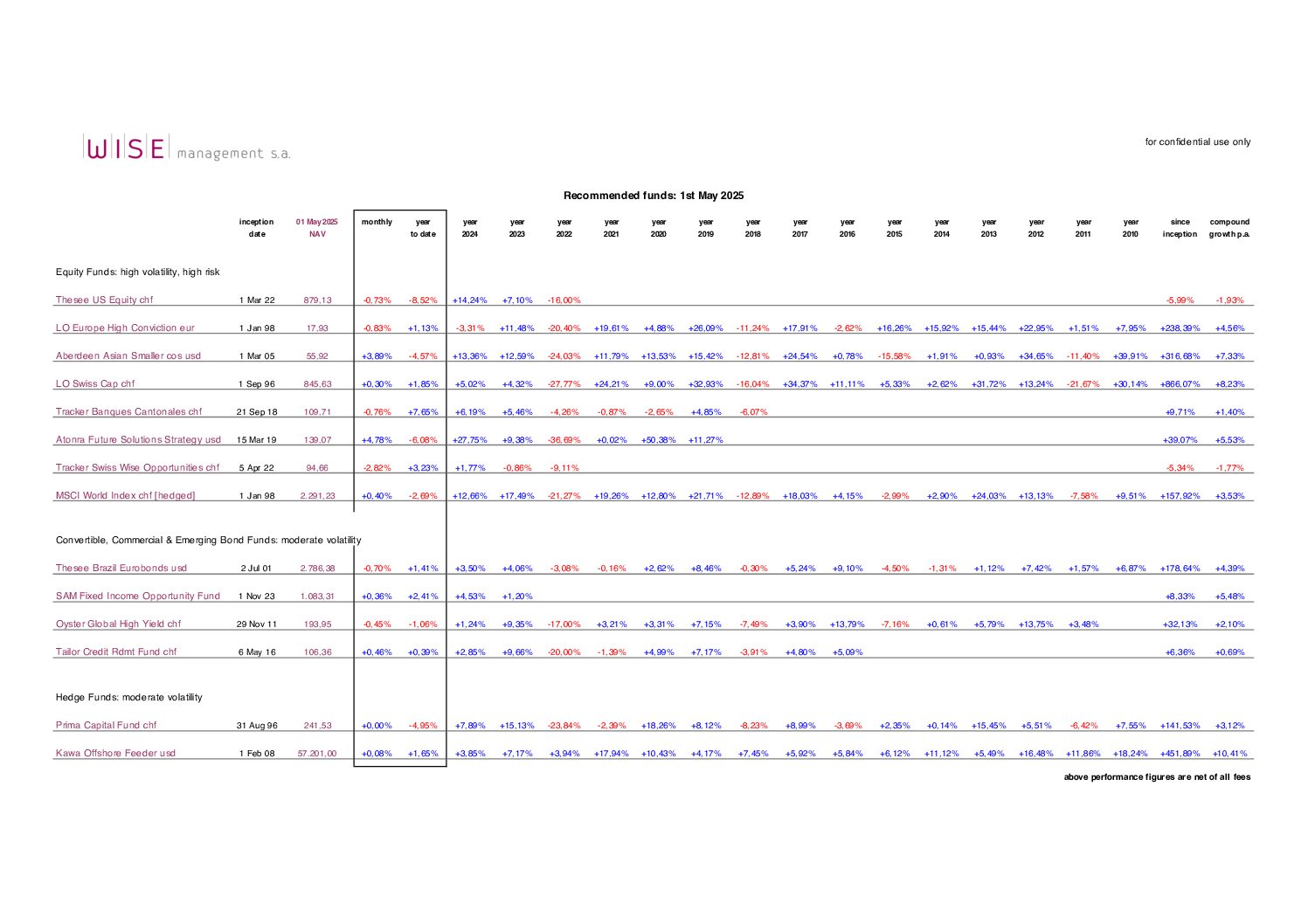
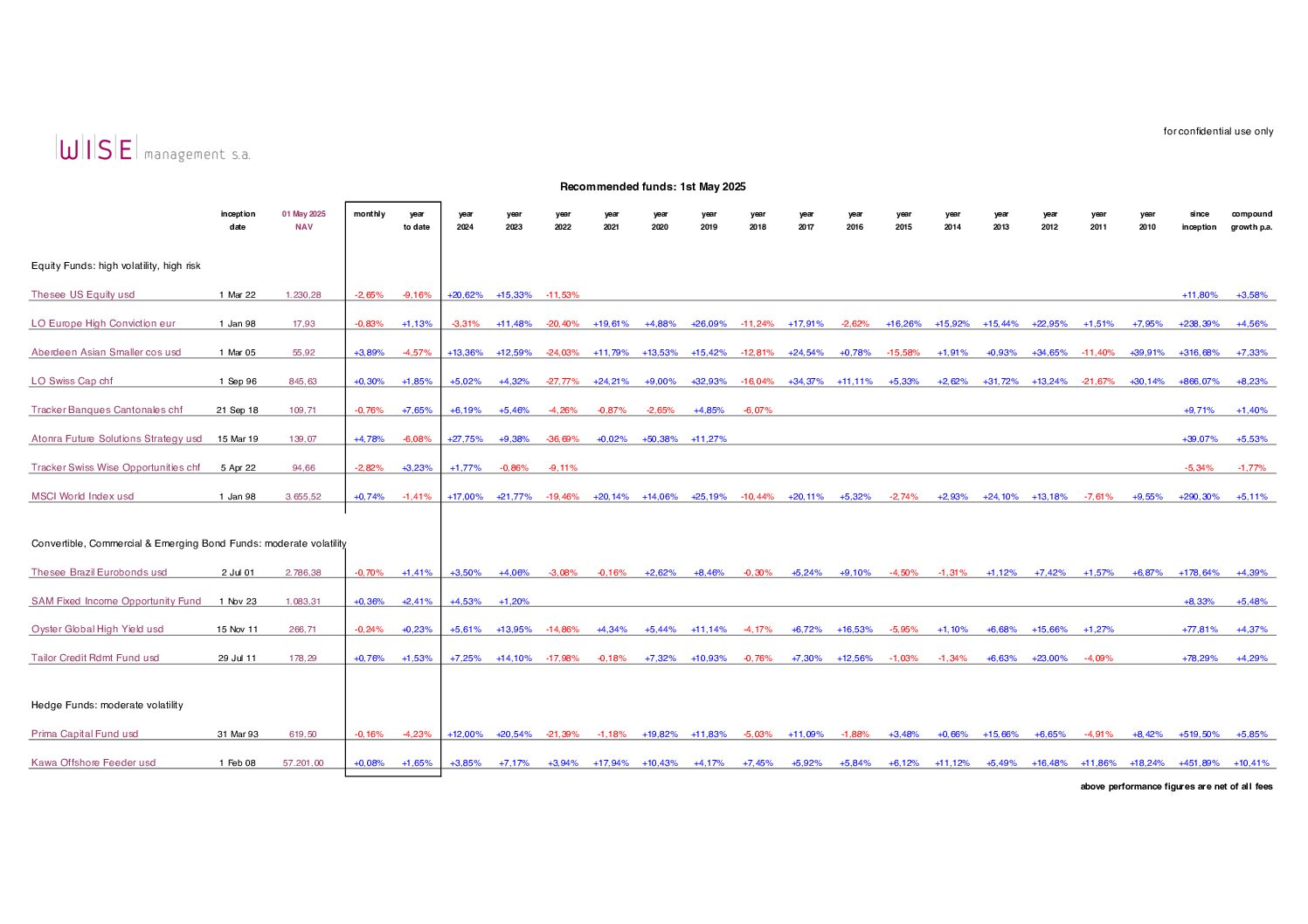
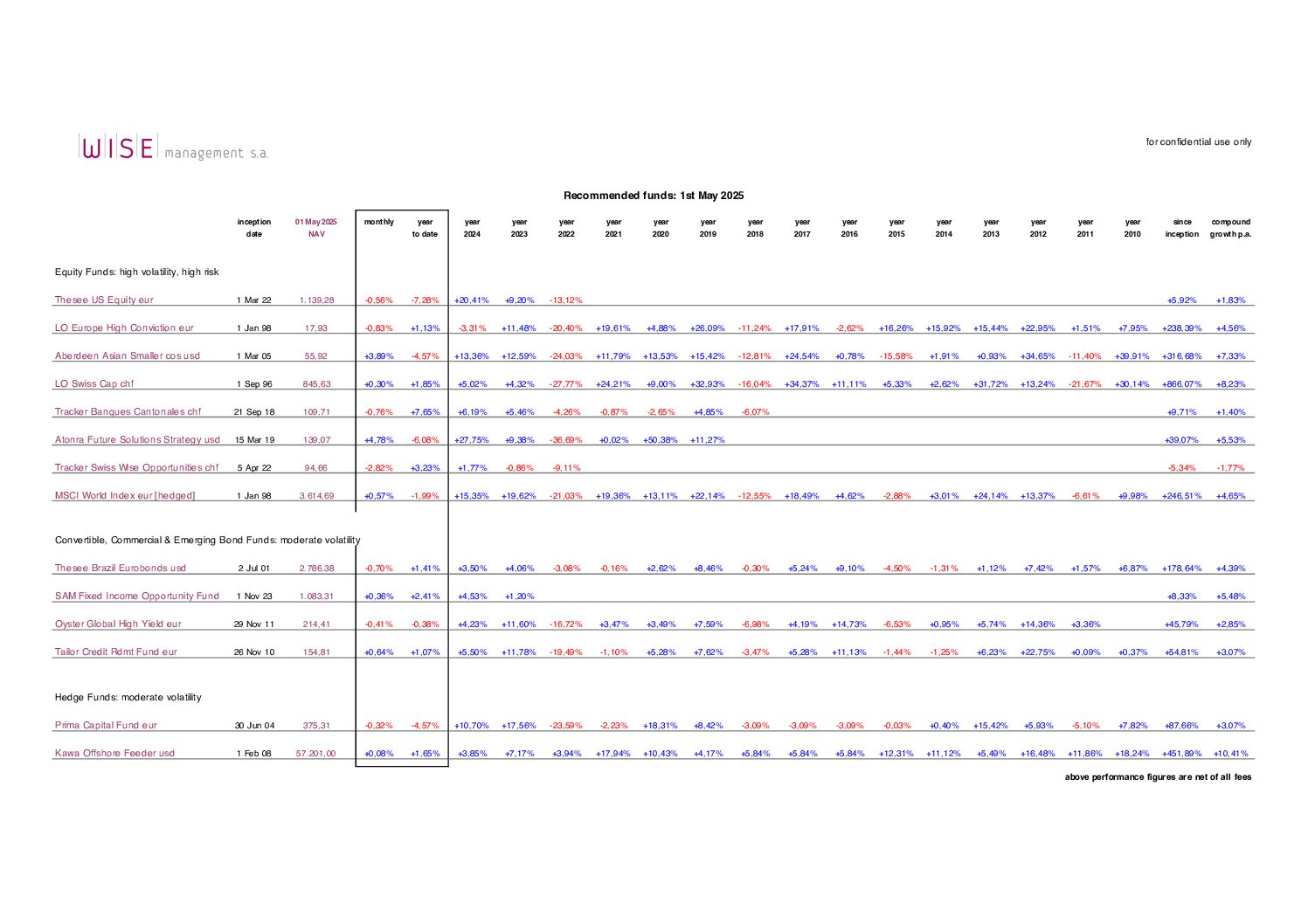
Selected Funds
08-2024
USD
EUR
CHF